
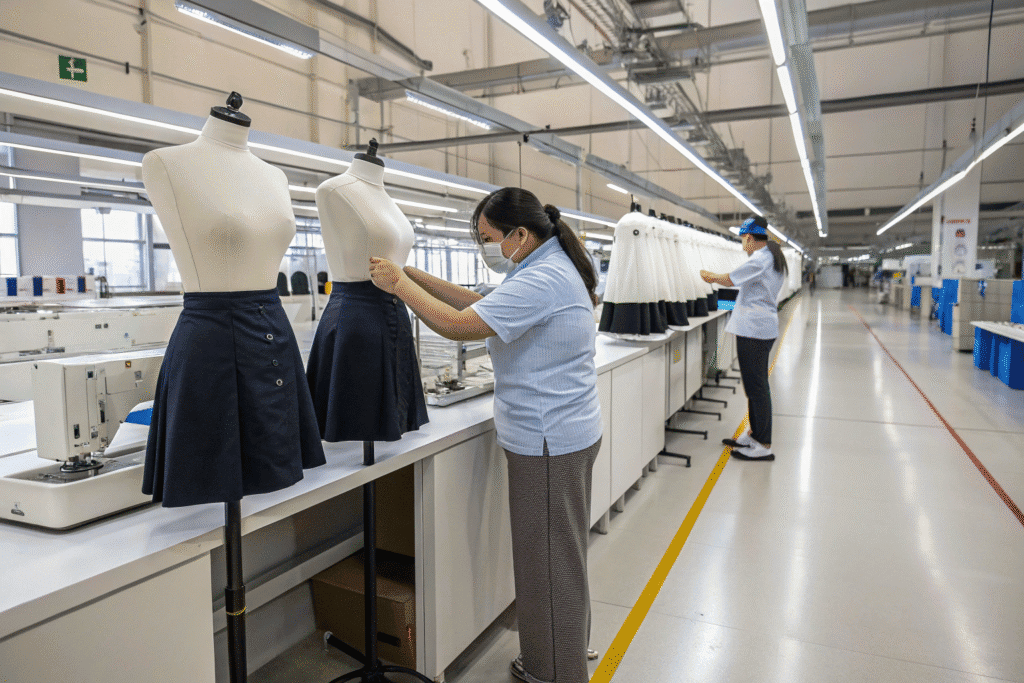
Customizing skirts according to brand specifications is a key service offered by professional OEM/ODM manufacturers. Whether it's custom short skirts, mini skirts, or other styles, manufacturers like Sunrisedress OEM & ODM services provide flexible options for skirt length, fabric selection, and design details.
How Do Manufacturers Adjust Skirt Length for Different Styles?
Techniques for Length Customization
Manufacturers offer flexibility in skirt length to meet brand or market demands. Common adjustments include:
- Mini, midi, and maxi variations based on design intent
- Custom hemline finishes such as raw edge, stitched hem, or decorative trims
- Length grading for different sizes to maintain proportion
- Customer-specific measurements to create private-label collections
Length Customization Table
| Skirt Type | Typical Length | Adjustment Method |
|---|---|---|
| Mini Skirt | 14–18 inches | Hem folding, stitching |
| Midi Skirt | 24–28 inches | Panel extension, fabric addition |
| Maxi Skirt | 36–45 inches | Full-length cutting and sewing |
| Custom | As per brand spec | Grading and bespoke pattern |
How Do Manufacturers Select and Recommend Fabrics?
Fabric Choice and Performance
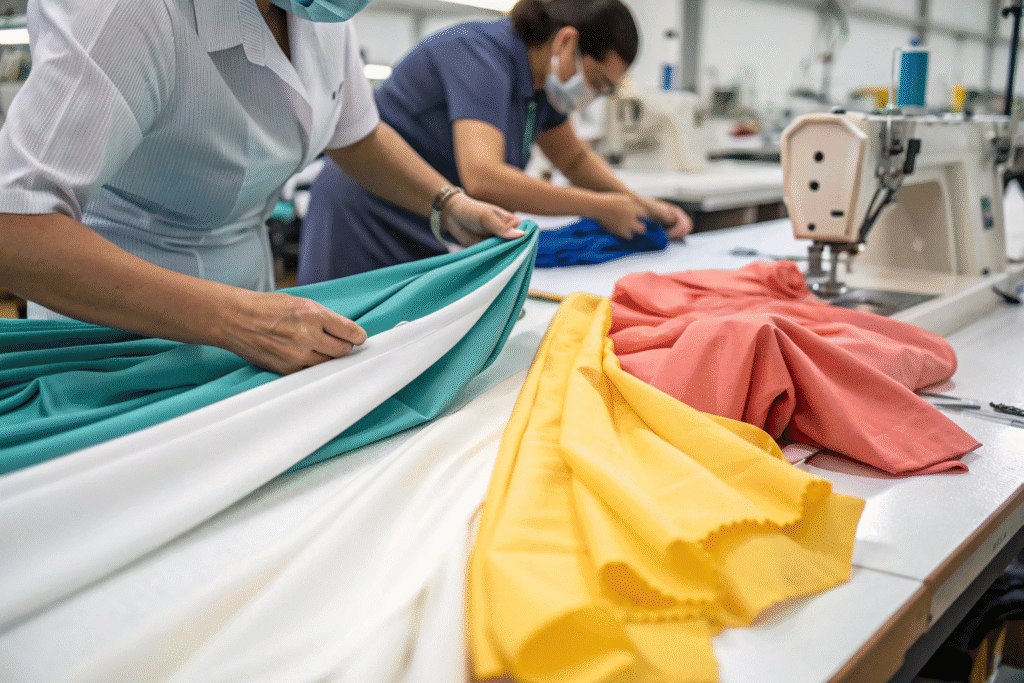
Fabric selection affects comfort, drape, appearance, and durability. OEM factories provide:
- Fabric sourcing from reliable suppliers
- Performance testing including stretch, shrinkage, and colorfastness
- Material recommendations based on skirt style (e.g., flowy chiffon vs structured denim)
Fabric Comparison Table
| Fabric | Best For | Key Properties |
|---|---|---|
| Cotton | Casual skirts | Breathable, soft, easy to sew |
| Polyester Blend | A-line / bodycon | Durable, wrinkle-resistant |
| Chiffon | Flowy, pleated skirts | Lightweight, drapey |
| Denim | Structured skirts | Thick, holds shape |
| Satin | Party / evening skirts | Smooth, glossy finish |
Brands can consult Sunrisedress fabric selection service for professional recommendations[^1].
How Do Manufacturers Implement Custom Design Features?
Design Options and Production Techniques
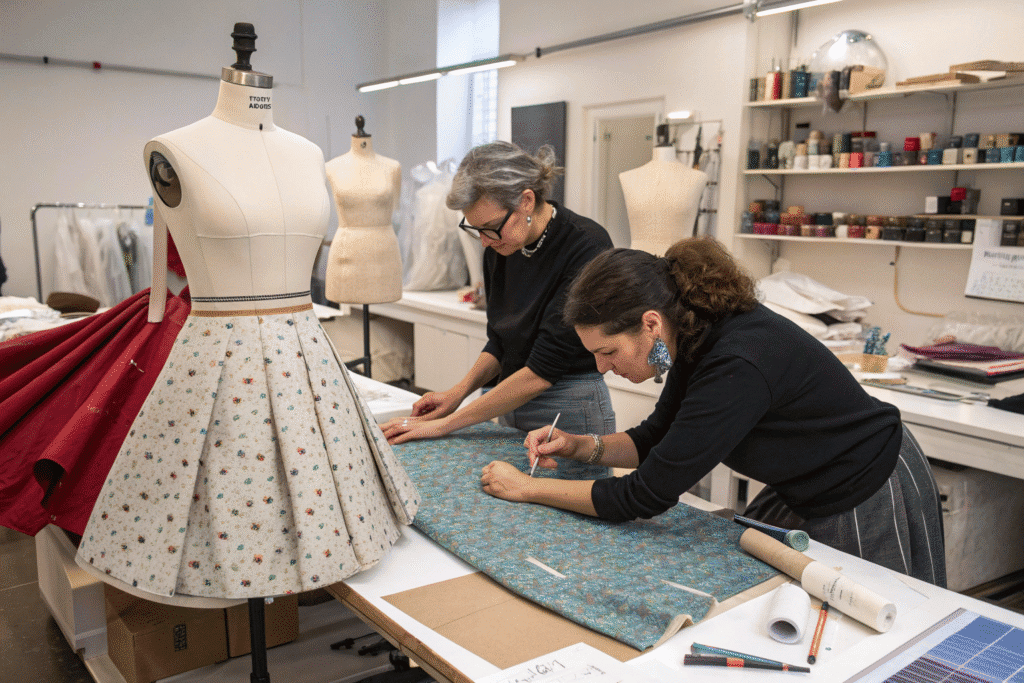
Customization goes beyond length and fabric. Manufacturers allow brands to include:
- Waist and hem detailing (elastic, belts, ruffles)
- Patterns and prints including digital prints, embroidery, or jacquard
- Panel or tiered skirt construction for volume and shape
- Pockets, pleats, and slit options for functionality and style
Design Feature Table
| Feature | Application | Benefit |
|---|---|---|
| Elastic / Belted Waist | All skirt types | Adjustable fit |
| Pleats / Tiers | Midi / Maxi skirts | Adds volume and style |
| Digital Print | Any fabric | Brand uniqueness |
| Slits / Pockets | Midi / Maxi | Functionality and aesthetics |
For high-quality custom design implementation, brands can use Sunrisedress dress craft details service.
How Do Manufacturers Ensure Quality in Customization?
QC and Production Oversight
Maintaining quality while customizing skirts is crucial. Factories implement:
- Sample approvals before bulk production
- In-line inspections during cutting, sewing, and finishing
- Final quality check including measurements, stitching, and fabric integrity
- Packaging review to maintain brand standards
Quality Assurance Table
| QC Stage | What to Check | Purpose |
|---|---|---|
| Sampling | Fit, length, fabric | Correct errors early |
| Cutting | Panel alignment, pattern accuracy | Ensure consistent sizing |
| Sewing | Stitch density, seam strength | Durable construction |
| Final Inspection | Overall quality, trims | Brand-standard delivery |
Reliable manufacturers such as Sunrisedress OEM short skirts provide detailed QC reports and sample approvals to ensure all customizations meet brand expectations[^2].
Conclusion
Professional OEM/ODM skirt manufacturers allow brands to customize length, fabric, and design while maintaining high-quality standards. Using comprehensive services such as Sunrisedress OEM & ODM services ensures your skirts meet brand specifications and market demands.